
You question everything. But how often do you question yourself?
What if the person you’re least likely to question is the one making every decision in your life?
You.
We spend an extraordinary amount of our lives questioning other people – and I think we should.
Their motives.
Their decisions.
Their beliefs.
Their behaviour.
Why did they react like that?
How can they possibly believe that?
Why can’t they see what’s glaringly obvious to us?
And whether we like it or not, other people are doing exactly the same thing to us.
They’re forming opinions about our behaviour.
Noticing our contradictions.
Interpreting our motives.
And occasionally seeing patterns in us that perhaps we can’t see because we’re standing right inside them.
That doesn’t mean they’re right.
Someone can misunderstand us, project their own experiences onto us, judge us unfairly or put us into a box that bears very little resemblance to who we really are.
But neither does it automatically mean they’re wrong.
And THAT’S where I think things get interesting.
What if, instead of immediately accepting someone else’s judgement OR immediately defending ourselves against it, we became curious enough to ask:
“Is there anything here for me to look at?”
Not:
They’re right about me.
Not:
How bloody dare they!
Just:
Is there something here that I haven’t been able, or perhaps willing, to see for myself?
Surely that’s part of genuine critical thinking too?
Other people’s observations are data, not verdicts
I think that’s an important distinction.
Someone might say:
“You never let anyone help you.”
My immediate reaction could be:
What rubbish. Of course I do.
Or I could investigate it.
When DID I last genuinely allow someone else to take responsibility for something important?
Do I ask for help, and then take over?
Do I say I want support while behaving in ways that make supporting me incredibly difficult?
😂
Suddenly their observation hasn’t become my identity.
It’s become data.
Likewise, if I decide somebody is:
Selfish.
Lazy.
Difficult.
Brainwashed.
Closed-minded.
Controlling.
That’s data about my interpretation of their behaviour.
It isn’t necessarily an objective description of who that person IS.
Perhaps we need to become much better at holding both possibilities:
Other people’s observations about me are data, not verdicts.
And my observations about other people are data, not necessarily truth.
That requires considerably more self-awareness than simply deciding who’s right.
We love turning the microscope outwards
I love people who question things.
I’m one of them.
I’ve spent years encouraging people to question more, not less.
We question governments.
We question pharmaceutical companies.
We question the media.
We question Big Tech.
We question doctors, scientists, politicians, corporations and increasingly AI.
We analyse propaganda, algorithms, advertising, conflicts of interest, psychological manipulation and who benefits from what we’re being told.
And I think we should.
Recently, I’ve become increasingly interested in what I think may be one of the biggest blind spots of the critical thinker.
We’re very good at turning the microscope outwards.
How often do we turn exactly the same microscope around?
Why? Because critical thinking that only works in one direction isn’t particularly critical.
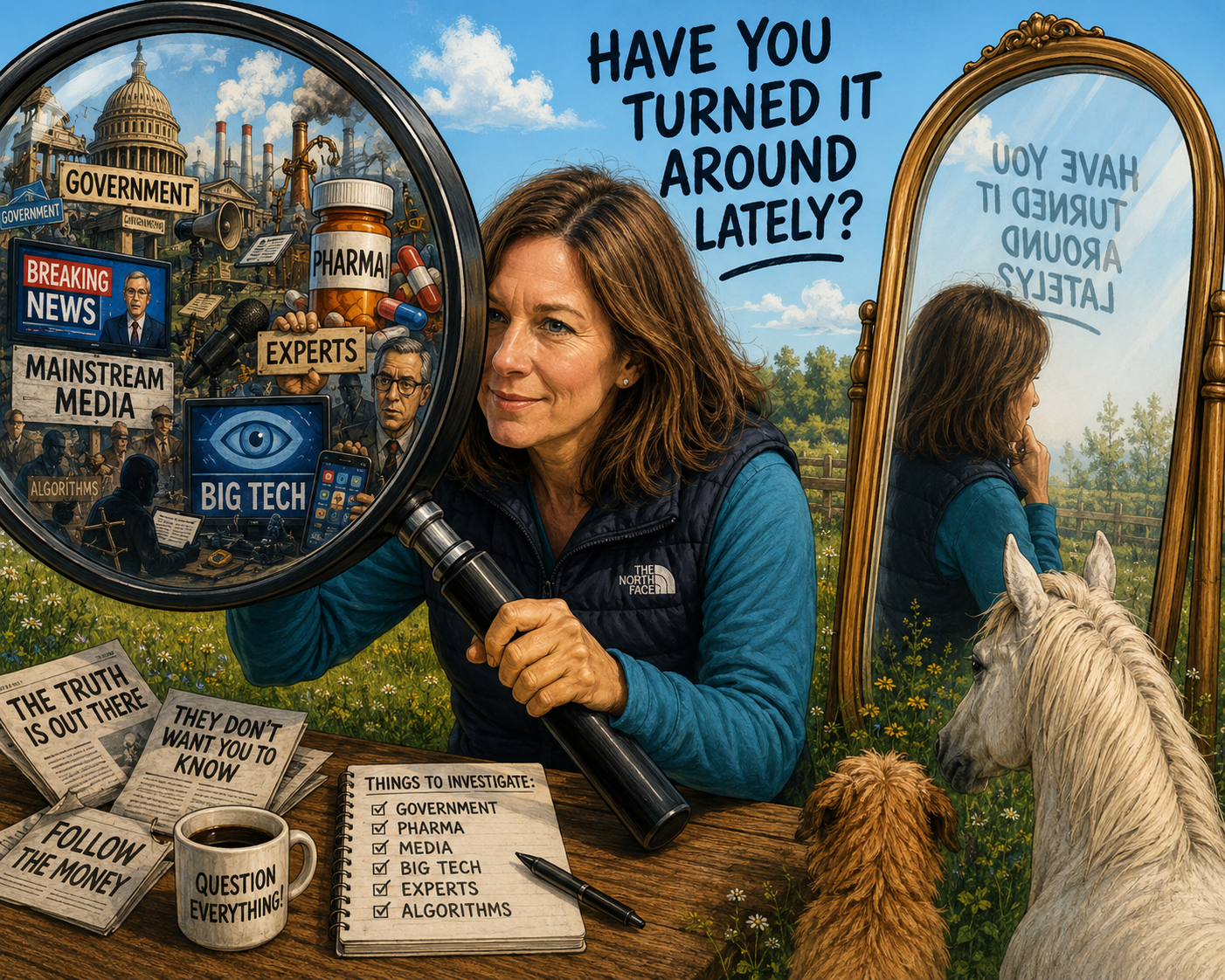
What happens when OUR beliefs become the ones nobody is allowed to question?
This is where it gets more uncomfortable.
We demand evidence from people we disagree with.
Do we demand the same quality of evidence from people we agree with?
We recognise fear-based messaging when it comes from mainstream media.
Do we recognise it when it comes from an alternative channel we watch every night?
We understand that repetition influences beliefs.
Does repetition somehow stop influencing us because we trust the person doing the repeating?
We recognise confirmation bias in them.
How often do we look for it in ourselves?
We complain that other people live inside echo chambers.
Have we checked ours recently?
We criticise people for refusing to change their minds.
When did we last change ours?
We don’t like other people putting us into boxes.
Who have we put into one?
Beliefs
We can become very attached to beliefs such as:
“The pharmaceutical industry is trying to harm us.”
“They’re all corrupt.”
“You can’t trust doctors anymore.”
“Everyone who can’t see what’s happening is asleep.”
“Everything is deliberately designed to control us.”
“There’s nothing ordinary people can do against the evil in the world.”
At the other end of the spectrum:
“My doctor says it’s safe, therefore it is.”
“The government wouldn’t be allowed to do that.”
“If that were really happening, it would be on the news.”
“Scientists agree, therefore the debate is over.”
Some of those statements may contain a lot of truth.
Some may not.
Some may be partly true.
Some may be true in one situation and completely wrong in another.
That’s not actually my point.
My question is:
At what point does a conclusion we reached through questioning become a belief we’re no longer willing to question?
Surely genuine critical thinking can’t mean:
Question everything until I reach the conclusion I agree with… then stop questioning.
Perhaps one of the most uncomfortable question of all:
Have I genuinely become an independent thinker, or have I simply found a different group of people to tell me what to think?
Ouch.
Then I realised I needed to go one step further
If I’m prepared to apply all of that scrutiny to governments, health, media, experts and other people’s beliefs…
Why wouldn’t I apply exactly the same standard to the beliefs I hold about my own life?
“I don’t have time.”
Do I really not?
“I have to do this.”
Do I?
“I can’t change that.”
Can’t I?
“That’s just my personality.”
Is it? Or could some of it be behaviour I’ve repeated for so long that it now feels like identity?
“Everybody depends on me.”
Do they?
“I can’t put myself first.”
What do I think would happen if I did?
Suddenly the critical-thinking skills we’ve developed for investigating the outside world become an extraordinarily powerful way of investigating ourselves.
So I turned the bloody microscope on myself 😂
If I’m going to ask the people I work with to examine their patterns, it seems only fair that I’m prepared to examine mine.
And I’ve found some interesting contradictions.
I say I want freedom.
Freedom is enormously important to me.
Yet when I actually look at my life, I have an extraordinary ability to collect responsibilities.
Animals.
Work.
Projects.
People I want to help.
Things I feel responsible for.
And occasionally things I’ve decided are my responsibility despite nobody actually asking me to take them on (that’s not always a bad thing, but it can become detrimental).
So instead of automatically saying:
“I’m too busy.”
I’ve started asking:
How much of what fills my life genuinely cannot be changed, and how much have I simply stopped questioning?
That’s a very different question.
Some of those responsibilities I consciously choose and wouldn’t change for the world.
Some are necessary.
Some bring enormous meaning to my life.
And some deserve another look.
I say my health is one of my greatest priorities.
I know an enormous amount about health.
But knowledge isn’t the same thing as behaviour.
If I looked only at my diary rather than listening to what Catherine says matters…
Would my diary agree that my health is a priority?
I say I want more fun.
Yet I’m exceptionally good at telling myself:
I’ll do that when I’ve finished everything.
There’s just one small flaw in this otherwise excellent plan.
Everything is NEVER bloody finished. 😂
So perhaps the problem isn’t that life isn’t giving me enough opportunities for fun.
Perhaps I sometimes postpone it.
That’s useful information.
Not ammunition to beat myself up with.
Data.
This is where behavioural work becomes fascinating
When we find these contradictions, we’re very quick to judge ourselves.
I need more discipline.
I’m lazy.
I’m terrible at boundaries.
I need more willpower.
I’m increasingly interested in asking something completely different:
Why does this behaviour make sense?
What does it give me?
What does it help me avoid?
What might it protect me from?
When did I start doing it?
What belief supports it? Are those beliefs mine?
What keeps reinforcing it?
And what is it costing me now?
That’s a very different conversation from:
What’s wrong with me?
Animals taught me this long before coaching did
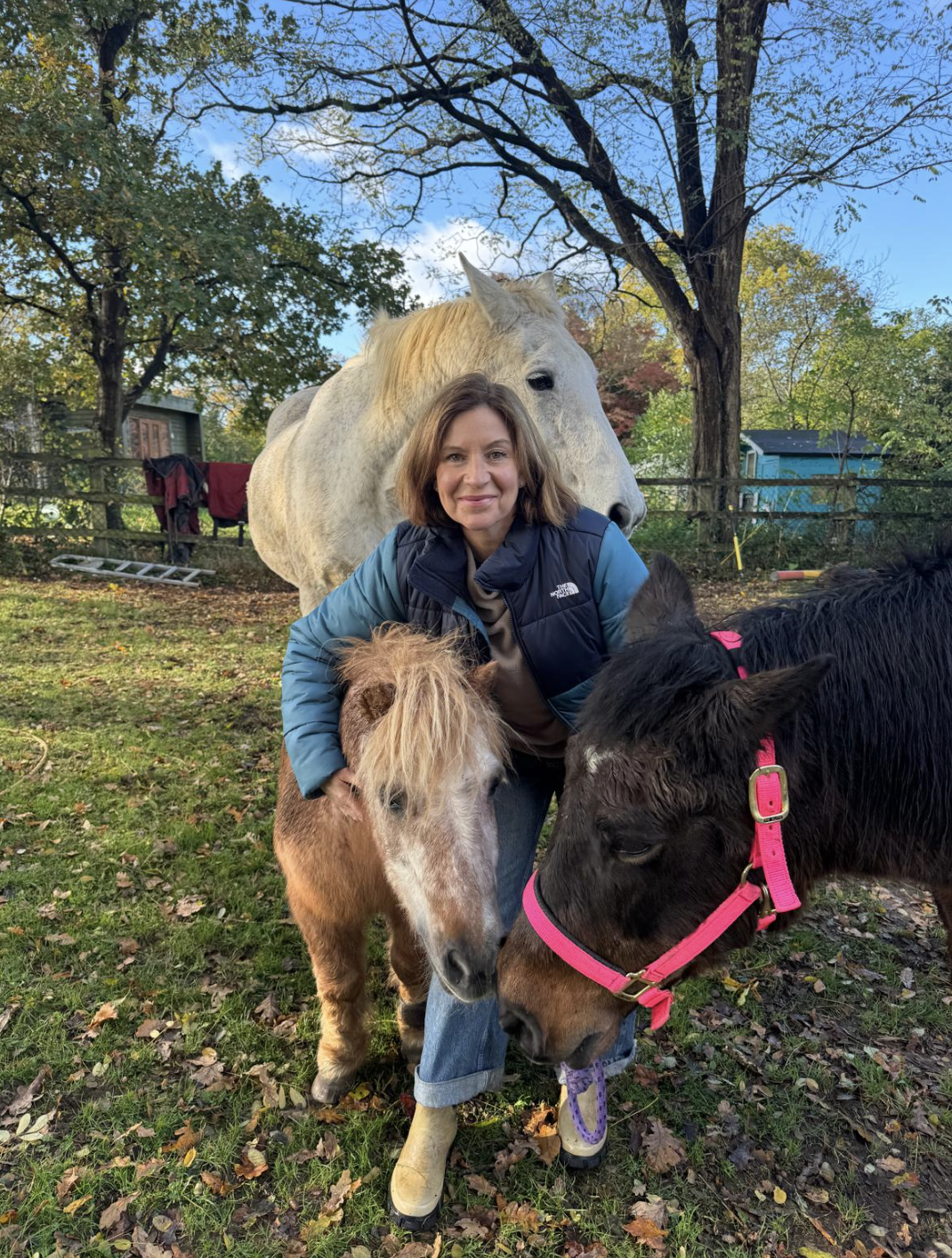
I’ve worked with animals for decades, and I think they’ve influenced the way I understand human behaviour far more than I realised.
If a dog repeatedly reacts aggressively or fearfully, telling it:
“For God’s sake, you KNOW better. Make better choices.”
isn’t likely to get us terribly far. 😂
We become curious.
What’s happened previously?
What’s the animal’s temperament?
What’s happening in the environment?
What triggers the behaviour?
What reinforces it?
Is there fear?
Is there discomfort?
What makes the behaviour better?
What makes it worse?
And importantly:
What can we change?
So why wouldn’t I bring some of that same curiosity to human behaviour?
Including my own.
Influence doesn’t stop being influence because we agree with it
This is one reason I find the work of people such as Chase Hughes interesting.
I don’t have to agree with every conclusion somebody reaches to find value in their observations about behaviour, influence, expectation and the way humans respond to their environment.
This is where I’ve become particularly fascinated.
We’re extremely interested in recognising when somebody else is influencing us.
Advertising.
Propaganda.
Government messaging.
Social media.
Algorithms.
But what happens when a message has been repeated for so long that we no longer recognise it as influence?
We simply call it:
“Me.”
That’s worth investigating.
Perhaps freedom has another layer
I talk a lot about freedom.
Health freedom.
Financial freedom.
Freedom of thought.
Freedom to question.
Freedom to make our own decisions.
But I’ve increasingly realised that there’s another layer.
How free am I if I’m unconsciously repeating patterns I would no longer consciously choose?
I’m not interested in becoming impossible to influence.
I don’t think any of us are.
I’m interested in becoming more aware of what is influencing me, so I have a greater opportunity to choose my response.
Awareness → discernment → choice.
To me, that’s a far more meaningful form of freedom.
TRY THIS: THE 7-DAY REALITY CHECK
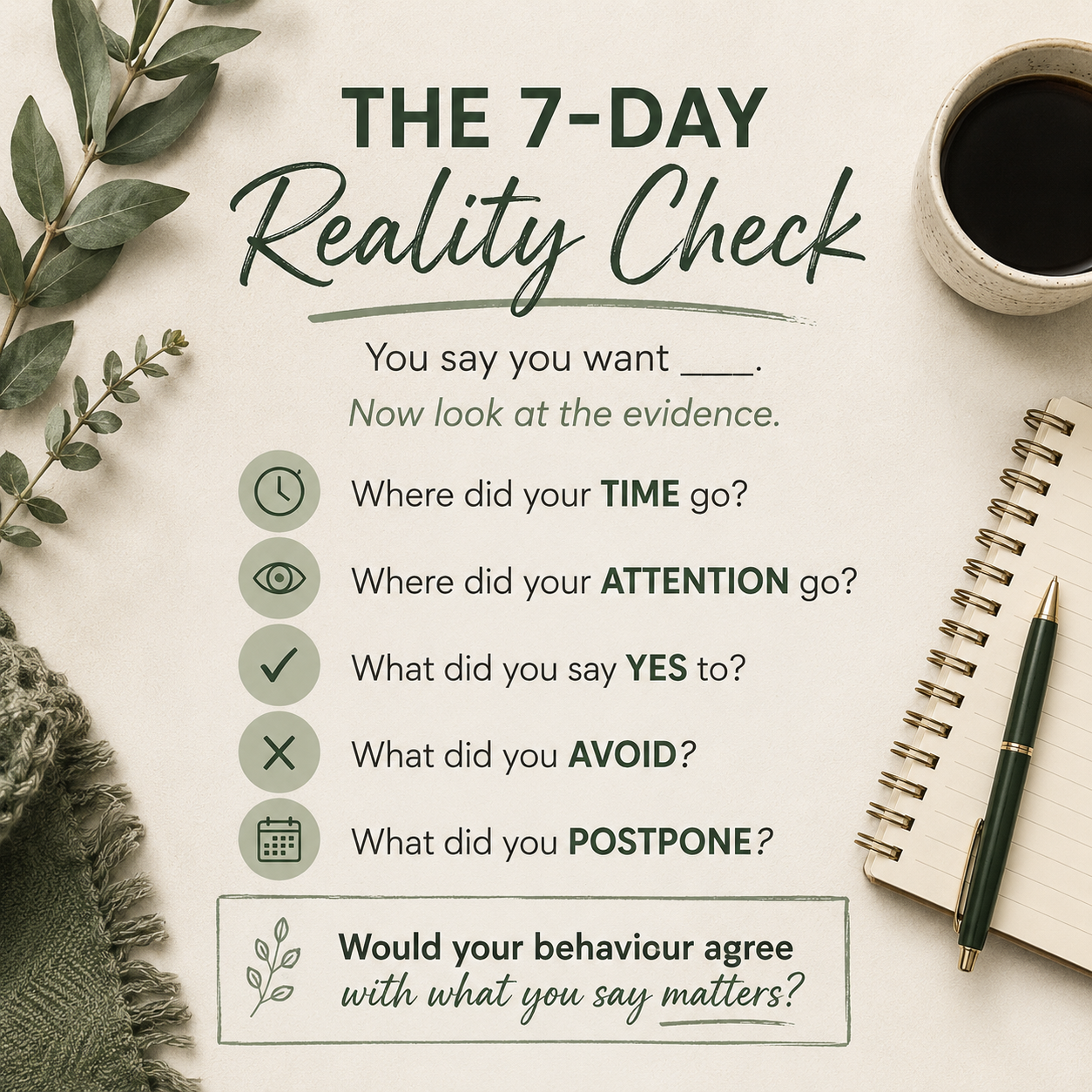
Don’t just agree with this article.
Question it.
Then question yourself.
Write down three things you genuinely say you want.
Perhaps:
I want better health.
I want more freedom.
I want a loving relationship.
I want financial security.
I want more fun.
Then forget what you intended to do last week.
Look at the evidence.
Where did your time go?
Where did your attention go?
What did you repeatedly say yes to?
What did you avoid?
What did you keep postponing?
What did you insist you “had” to do?
What behaviour did you repeat even though it took you further away from something you say you want?
And then ask yourself:
If someone knew absolutely nothing about me and could only observe my behaviour for seven days, what would they conclude my priorities were?
Don’t use the answer to beat yourself up.
Get curious about it.
There may be an extraordinarily good reason why your behaviour makes sense.
And once you understand that reason, you’ve got something far more useful to work with than judgement.
Keep questioning
Keep questioning governments.
Keep questioning corporations.
Keep questioning experts.
Keep questioning alternative experts.
Keep questioning the people you disagree with.
Keep questioning the people you agree with.
And please keep questioning me.
Just don’t develop such a powerful microscope for examining everybody else that you forget to occasionally turn it around.
And when somebody else turns theirs towards you?
You don’t have to accept their conclusion.
You don’t have to defend yourself against it either.
Perhaps sometimes you can simply ask:
“Is there anything here that’s useful for me to see?”
Self-awareness isn’t believing everybody else’s opinion of you.
It’s becoming secure enough to examine it without automatically accepting it or automatically defending against it.
Other people’s observations are data, not verdicts.
Our observations of others are data, not necessarily truth.
And our own long-held beliefs?
They deserve questioning too.
Some of the beliefs influencing your life may not be coming through your television, your phone, your government or an algorithm.
Some may be coming from you.
And unlike many of the things happening in the world…
those may be the ones you have the greatest power to do something about.
This is increasingly at the heart of my private behavioural coaching work, not telling people what to think, but helping them recognise the beliefs, behaviours and protective patterns influencing the choices they’re making today.
Once you can see a pattern, you finally have the opportunity to decide whether you still want it running your future.
If this has made you recognise something in yourself that you’d like some help unravelling, message me and I’ll send you some information.
Alternatively you can check out more here:
https://www.catherineedwards.life/consults/freedom-from-self-sabotage-10-week-programme/