
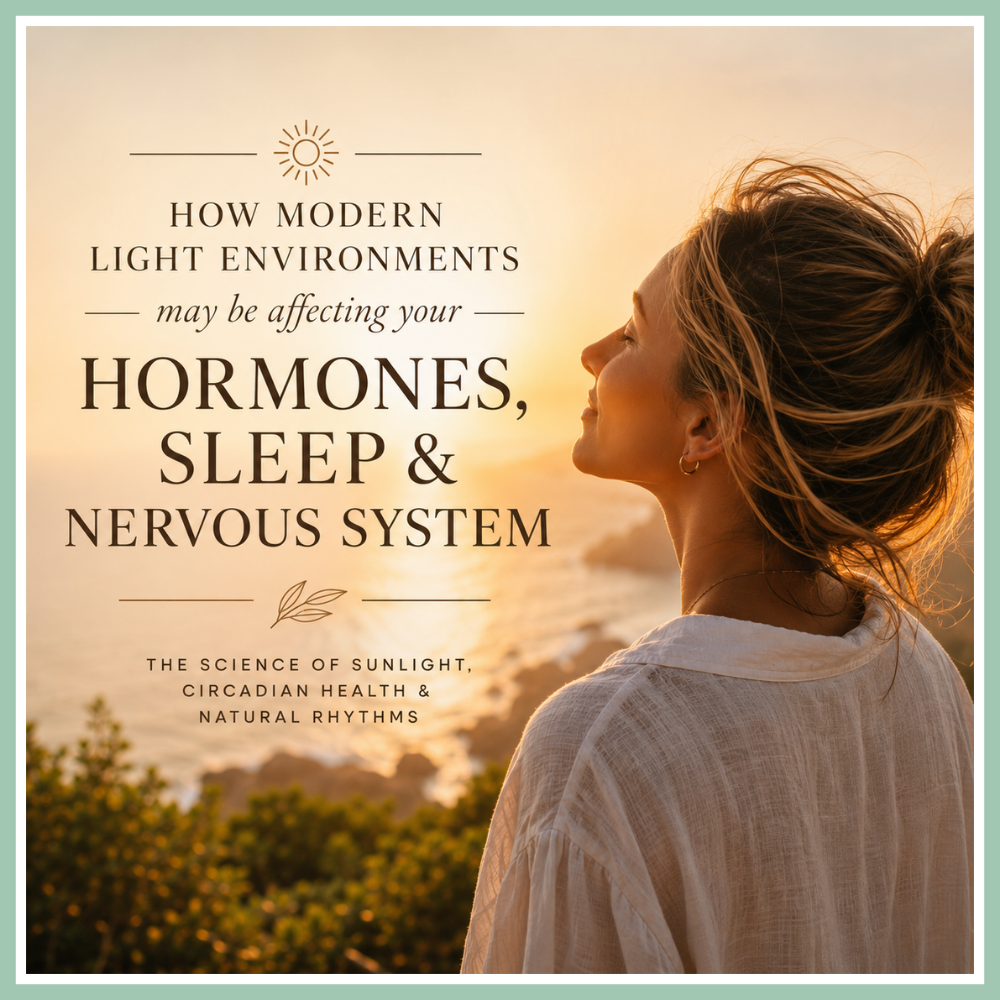
Why is it that all the modern conveniences, well most of them, come back to bite us health wise, and how can we integrate modern life without causing so many health issues? I think awareness is key so you are making conscious choices and where you can balance the risks. Light is one of these areas.
The more disconnected we become from natural light, natural rhythms, and time outdoors… the worse many people seem to feel.
Poor sleep.
Anxiety.
Low mood.
Hormonal imbalance.
Chronic fatigue.
Burnout.
Feeling “wired but tired.”
And while there are obviously many factors involved in modern ill health, one area I believe deserves far more attention is our relationship with light.
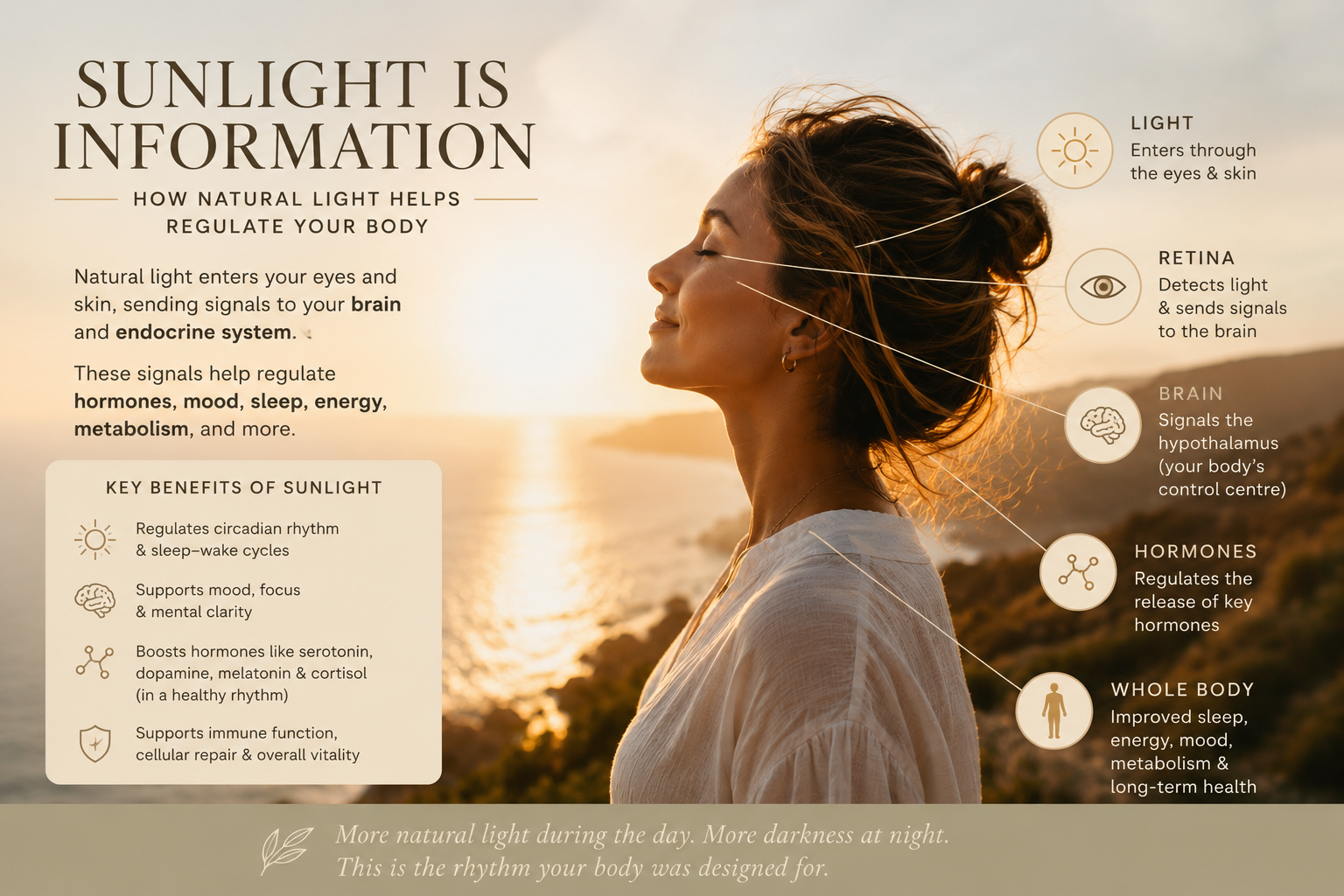
Because light isn’t just something we see.
It’s biological information.
Your body uses light to regulate hormones, metabolism, mood, sleep cycles, energy production, nervous system balance, and even cellular repair.
And yet most people now:
- wake up indoors
- spend all day under artificial lighting
- wear sunglasses outside
- stare at screens until midnight
- rarely see sunrise or sunset
- and live deeply disconnected from the natural light cues humans evolved with
So let’s explore this properly, from a place of understanding how deeply connected human biology is to the natural world.
Your Body Runs on Circadian Rhythms
Every cell in your body operates on timing.
This internal biological clock — often called your circadian rhythm — helps regulate:
- sleep and wake cycles
- cortisol
- melatonin
- metabolism
- digestion
- reproductive hormones
- mood
- cognitive performance
- immune function
One of the biggest regulators of this system?
Light.
Especially natural outdoor light.
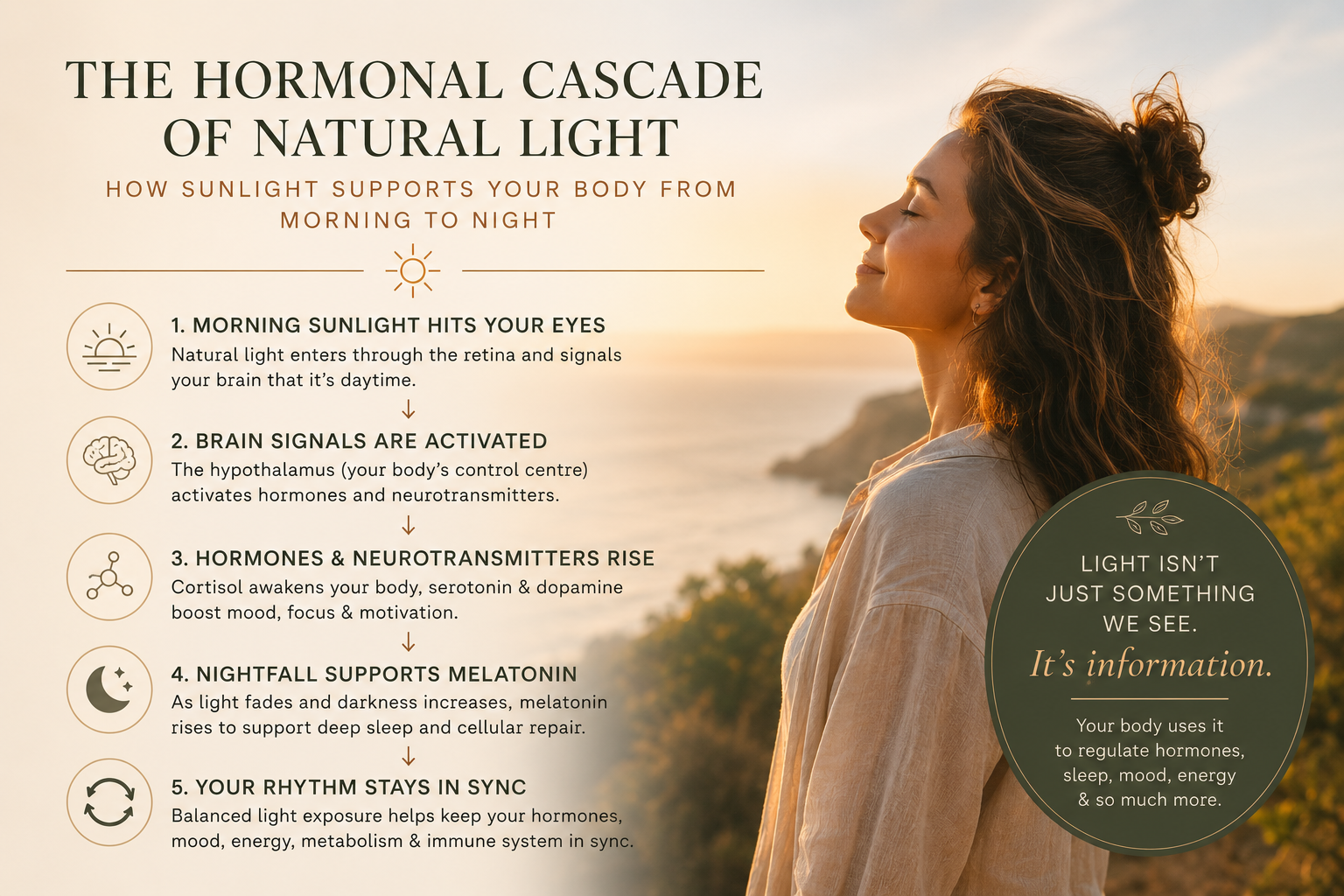
When natural light enters the eyes (particularly in the morning), signals travel through the retina to areas of the brain including the hypothalamus and suprachiasmatic nucleus — the body’s “master clock.”
This helps tell the body:
- what time of day it is
- when to produce energy
- when to release hormones
- when to feel alert
- and when to prepare for sleep and repairIn other words…Morning NATURAL light helps set the rhythm for the entire day.
Morning Sunlight & Hormonal Health
One of the reasons many people feel so much better after spending time outdoors in the morning isn’t “just fresh air.”
Natural morning light appears to play an important role in regulating several important neurotransmitters and hormones involved in mood, motivation, focus, and sleep.
This includes pathways linked to:
- serotonin
- dopamine
- cortisol regulation
- melatonin production later at night
Morning sunlight exposure is also associated with:
- improved sleep quality
- better mood stability
- improved energy
- stronger circadian alignment
- better daytime alertness
- nervous system regulation
This is one reason many circadian health experts encourage getting outside soon after waking — ideally without immediately looking at a phone screen first.
Even cloudy outdoor light is significantly stronger and more biologically active than most indoor lighting.
And for you men out there…
Natural morning light exposure may also help support healthy testosterone rhythms indirectly through better circadian alignment, sleep quality, stress regulation and nervous system balance. Testosterone production is closely tied to deep sleep and healthy daily light-dark cycles — something modern indoor living, late-night screens and artificial lighting can easily disrupt.
So I regularly remind my husband that me sending him outside at dawn to help feed all the animals is actually doing him a massive favour hormonally… isn’t he lucky 😆
Why Natural Light Feels Different
Have you ever noticed how different you feel after:
- sitting outside in the morning sun
- walking barefoot on the beach
- hiking outdoors all day
- watching a sunset
- or spending a full day away from screens?
Most people describe feeling:
- calmer
- clearer
- more grounded
- emotionally lighter
- mentally sharper
- more connected
There are likely many reasons for this:
- reduced screen exposure
- movement
- fresh air
- nervous system downregulation
- time in nature
- sunlight exposure
- improved circadian signalling
Sunlight exposure has also been associated with the release of beta-endorphins — natural neurochemicals linked to mood, resilience, and wellbeing.
This may partly explain why regular outdoor exposure often feels emotionally regulating for many people.
The Sunglasses Conversation
Right… let’s have the sunglasses conversation properly.
Because honestly, I’m tired of the strange modern idea that humans — like every other species on Earth — evolved under the sun for thousands of years (OK – I Hear you, evolution is a whole conversation we should have, but not today) … only for us to suddenly decide our eyes should almost never experience natural light.
We now live:
- indoors most of the day
- under artificial lighting
- staring at screens
- disconnected from sunrise and sunset
- and then slap dark plastic over our eyes the second we step outside.
And somehow this is considered “normal.”
Now before people panic:
I’m not saying nobody should ever wear sunglasses.
Of course there are situations where they make sense:
- driving safely
- extreme glare
- snow
- water reflection
- certain medical or eye conditions
- intense midday environments
That’s just common sense.
But outside of that?
Personally, I think modern sunglasses are massively overused.
Natural light entering the eyes is part of how the body understands:
- time of day
- circadian rhythm
- hormone timing
- cortisol regulation
- melatonin production
- alertness
- sleep cyclesWe are biological creatures.
Not robots (YET!).And when people spend most of their lives indoors, disconnected from natural environmental signals, then heavily filter outdoor light too… I think it’s fair to question whether that’s helping human health. Animals don’t run around in Oakleys avoiding sunrise. In fact, most of nature moves toward natural light. Meanwhile humans are often:- sleep deprived
- hormonally dysregulated
- anxious
- exhausted
- disconnected from nature
- and frightened of the very thing life evolved under.
That doesn’t mean staring at the midday sun.
It means rebuilding a sane relationship with natural light again.There’s a huge difference between:
- gentle morning and evening sunlight
and - blasting yourself for hours in extreme midday heat with no common sense.
Context matters.
Personally?
I think many people would benefit enormously from:- more sunrise and sunset exposure
- more outdoor time
- less artificial lighting
- less unnecessary dark lens use
- and more trust in the body’s relationship with nature.
Without turning sunlight into another thing to fear.
Melatonin: Far More Than a “Sleep Hormone”
Melatonin is often talked about as simply a sleep aid.
But it’s far more important than that.
Melatonin is deeply involved in:
- circadian rhythm regulation
- cellular repair
- antioxidant activity
- mitochondrial health
- immune function
- recovery processes during sleep
Healthy melatonin production depends heavily on proper light-dark cycles.
This means:
- bright natural light during the day
- and darkness at night
The problem is many modern environments completely confuse this system.
We now experience:
- dim indoor lighting during the day
- then intense artificial light at night
Essentially the reverse of what human biology evolved around.
Artificial Light at Night May Be One of the Biggest Problems
If there’s one area I believe deserves far more public attention, it’s this.
Because while sunlight is often blamed for everything…
Many people are now spending:
- 10+ hours under artificial lighting
- staring at LED screens late into the evening
- scrolling in brightly lit rooms until midnight
- sleeping with TVs, routers, and devices nearby
- rarely experiencing true darkness
Artificial blue-rich light at night can interfere with normal melatonin production and circadian signalling.
And over time, poor circadian rhythm regulation may impact:
- sleep quality
- recovery
- hormone balance
- metabolic health
- mood
- stress resilience
This is why some people find:
- dimmer lighting at night
- reducing evening screen exposure
- candlelight
- warmer bulbs
- and blue-light blocking glasses after sunset
can genuinely improve how they feel and sleep.
This is a HUGE area in schools… look into itt parents. All these behavioral diagnoses? Look into lights first – see … One of the main names people reference in this area is John Ott, who studied the effects of lighting on behaviour, learning and health in schools back in the 1970s.
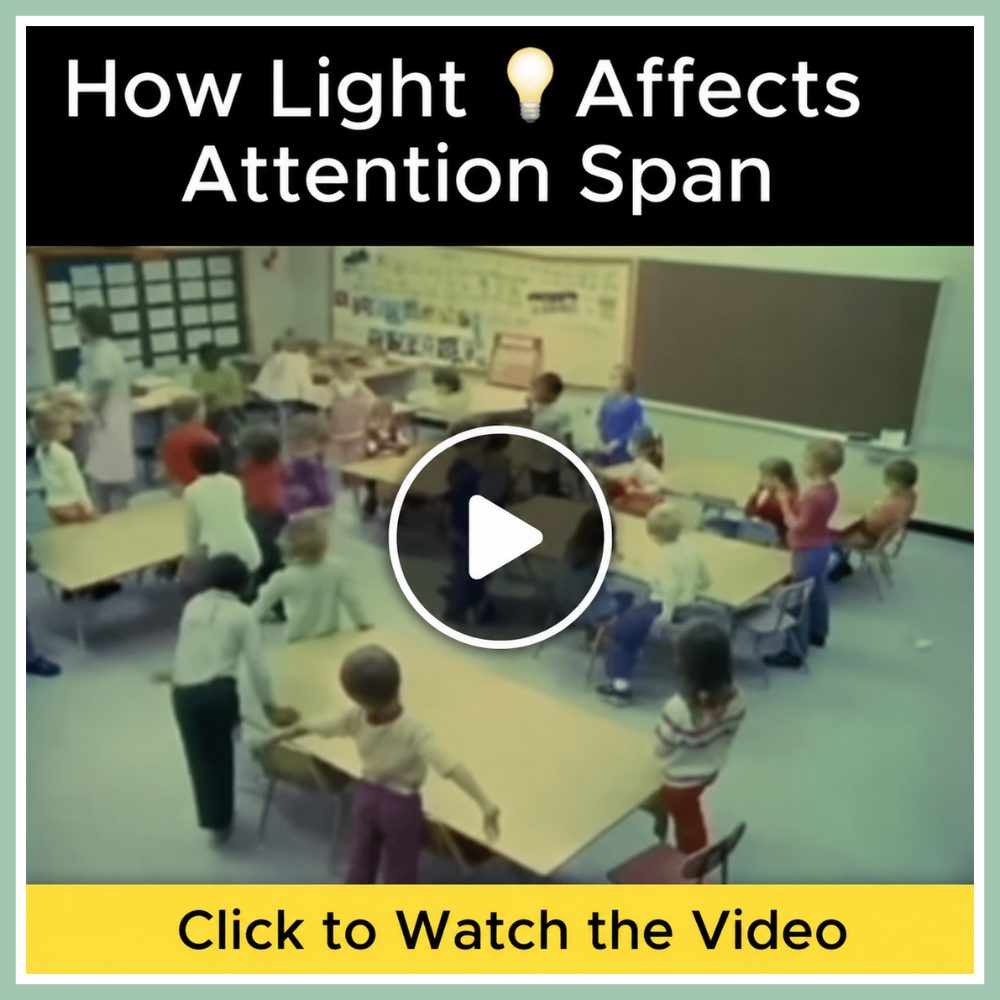
Ott reported that when some classrooms switched away from standard cool fluorescent lighting toward more full-spectrum/incandescent-style lighting conditions, teachers observed:
- calmer behaviour
- improved attention
- reduced hyperactivity
- and improved learning engagement.
One of his most referenced studies was:
“Influence of Fluorescent Lights on Hyperactivity and Learning Disabilities” (1976).Ref https://journals.sagepub.com/doi/10.1177/002221947600900704?utm
He also discussed classroom behaviour observations in interviews and articles, including reports that disruptive behaviour was noticeably higher under fluorescent lighting. https://www.motherearthnews.com/sustainable-living/nature-and-environment/john-ott-zm0z86zhun/
A More Natural Relationship With Light
I don’t think the goal is perfection.
Or obsessing over every light bulb.
But I do think modern humans have become profoundly disconnected from the natural environmental signals that once regulated biology automatically.
And sometimes the answer isn’t always:
- another supplement
- another medication
- another stimulant
- another “biohack”
Sometimes it’s:
- morning sunlight
- less screen exposure
- better sleep
- more outdoor time
- slower evenings
- nervous system regulation
- reconnecting with natural rhythms
Simple things.
Not always easy in the modern world.
But often incredibly powerful.
And Please don’t forget your animals need this too!
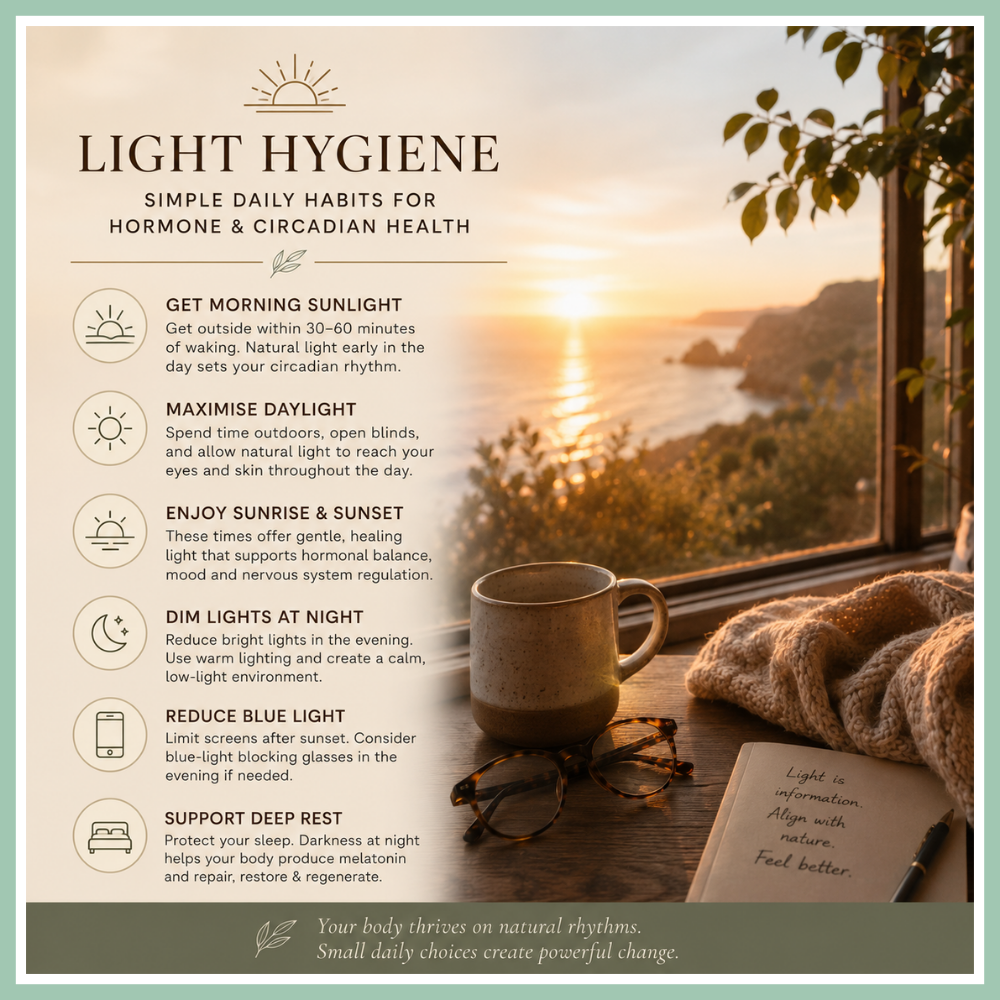
Simple Ways to Support Circadian Health
Here are a few realistic starting points:
- Get outside within 30–60 minutes of waking when possible
- Allow natural daylight into your eyes indirectly (without staring at the sun)
- Spend more time outdoors during the day
- Watch sunrise or sunset occasionally
- Reduce bright artificial light at night
- Avoid doom-scrolling before bed
- Use warmer lighting in the evening
- Consider blue-light blocking glasses after sunset if you spend long hours on screens
- Prioritise proper sleep and recovery
Small daily inputs matter more than most people realise.
The human body evolved under sunlight, darkness, seasons, movement, and nature.
Not under fluorescent lights and endless screen exposure.
That doesn’t mean we need to reject modern life.
But perhaps we do need to become more conscious of how disconnected many of us have become from the rhythms that once kept human biology in balance naturally.
And maybe part of feeling better isn’t always about adding more…
Sometimes it’s about reconnecting with what the body has always known.
For more info on light therapy devices see: